
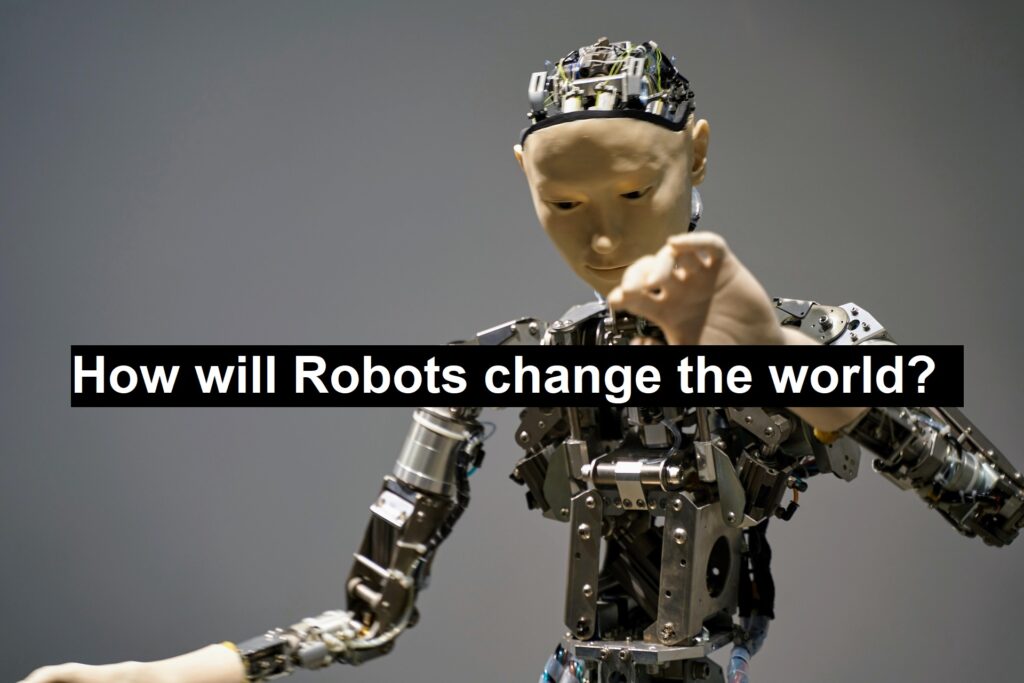
When we suppose of robots, we frequently fantasize sci- fi- inspired, creatural automatons. While these types of machines remain substantially fictional, there are numerous other types of robots in use moment. But what exactly are robots? And how will they affect change in the world?
As we explore in our open step the nature of robots, robots are different from other machines because of how they interact with the world. They can make changes to their surroundings grounded on their conduct and respond to the world around them.
Robots are tools that can smell, reason, plan, and act on their own. They can’t only perform tasks autonomously, but they can also extend mortal capabilities and mimic mortal conduct. Eventually, the term robot is deduced from the Czech word robota, which means forced labor.
Types of robots
Industrial. maybe the most common use of robots is for simple and repetitious artificial tasks. exemplifications include assembly line processes, selecting and quilting, welding, and analogous functions. They offer trustability, delicacy, and speed.
service. More recent developments mean that military forces worldwide use robots in areas similar as UAVs( Unmanned Aerial Vehicles), UGVs( Unmanned Ground vehicles), triage, and surveillance.
Service. One of the main growth areas in robotics is the particular service assiduity. Uses include homemade tasks similar as allocating food and cleaning.
disquisition. We frequently use robots to reach hostile or else inapproachable areas. A good illustration of exploratory robots is in space disquisition, similar as the Curiosity Rover on Mars.
Dangerous surroundings. Again, certain surroundings can be dangerous for humans to enter, similar as disaster areas, places with high radiation, and extreme surroundings.
Medical. In the world of healthcare, Medtech robots are being used in all kinds of ways. Whether it’s managing laboratory samples or aiding with surgery, recuperation, or activity.
Entertainment. Decreasingly( particularly during the epidemic), people are buying robots for enjoyment. There are several popular toy robots, and there are indeed robot caffs and giant robot statues.
The future of robotics Will Robots take over the world?
Robots are formerly each around us, whether they ’re automated machines that assemble our buses or virtual sidekicks that use conversational interfaces to help us around the house. still, as we’ve seen, they aren’t presently applicable for all aspects of life. Will this, still, change in the future?
Despite fears of an AI preemption, in which machines replace humans as the world’s dominant intelligence, such a script appears doubtful. still, according to the business network PwC, robots could automate up to 30 of jobs by themid-2030s.
Other reports suggest that the stock of robots worldwide could reach 20 million by 2030, with automated workers taking up to 51 million jobs in the coming 10 times. So, while they may not take over the world, we can anticipate to see further robots in our diurnal lives.
How robots will change the world
According to a McKinsey report, robotization and machines will change the way we work. They prognosticate that different chops will be needed to find work across Europe. According to their model, conditioning taking primarily physical and homemade chops will decline by 18 by 2030, while those taking introductory cognitive chops will drop by 28.
Workers will need technological chops, and those with STEM moxie will be in high demand. also, numerous places will bear socioemotional chops, especially those in which robots are ineffective backups, similar as caregiving and tutoring.
Robots may also come a further integral part of our diurnal lives. numerous simple tasks in our homes, similar as cuisine and cleaning, may be fully automated. also, with robots that can use computer vision and natural language processing, we may see further interactive machines, similar as tone- driving buses and digital sidekicks.
Robotics may also have an impact on the future of drug. Surgical robots can perform extremely precise operations and, with advances in artificial intelligence, could ultimately perform surgeries on their own.
Machines and robots with the capability to learn could have a wider range of operations. Robots that can acclimatize to their surroundings, learn new processes, and change their geste in the future will be more suited to further dynamic tasks.
Eventually, robots have the eventuality to enhance our lives. As well as shouldering the burden of physically demanding or repetitious tasks, they may be suitable to ameliorate healthcare, make transport more effective, and give us further freedom to pursue creative trials.