

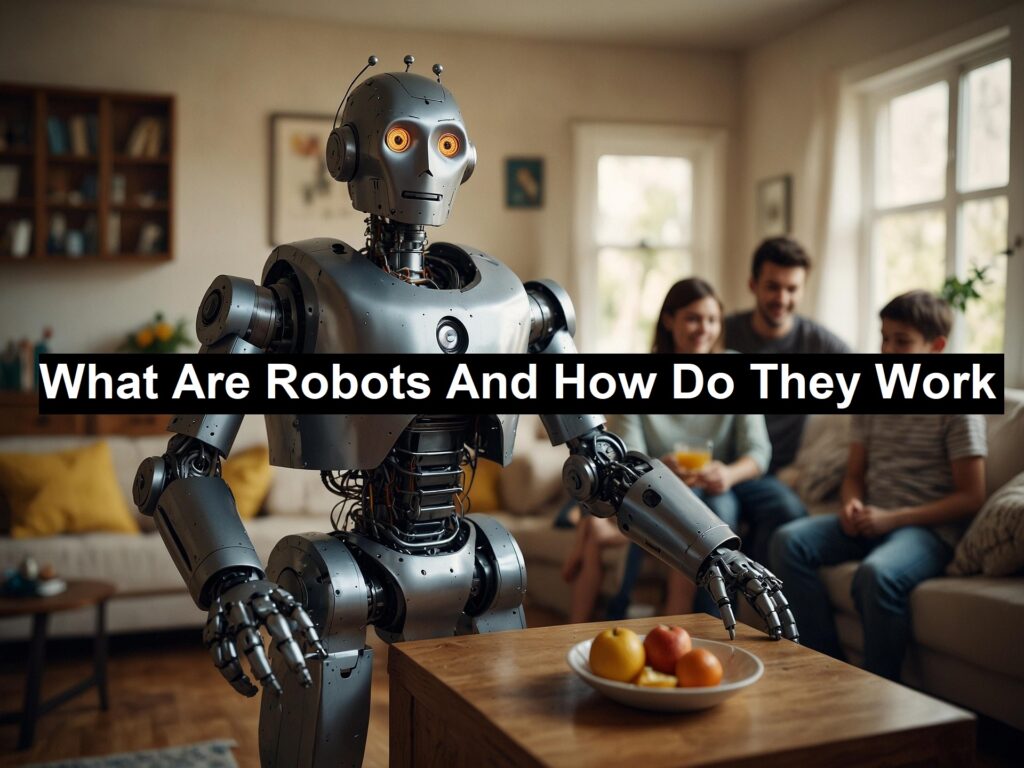
A robot is a sort of computerized machine that can execute particular assignments with small or no human mediation and with speed and accuracy. The field of mechanical autonomy, which bargains with robot plan, building and operation, has progressed strikingly in the final 50 years.
IDC distinguishes mechanical autonomy as one of six development quickening agents driving computerized change. The others incorporate 3D printing, cognitive computing, next-generation security and virtual reality or expanded reality.
What can robots do?
Essentially, there are as numerous diverse sorts of robots as there are errands for them to perform. Robots can perform a few assignments superior than people, but others are best cleared out to individuals and not machines.
The taking after are things robots do way better than humans:
- Automate manual or dreary exercises in corporate or mechanical settings.
- Work in unusual or dangerous situations to spot dangers like gas leaks.
- Process and provide reports for undertaking security.
- Fill out pharmaceutical medicines and prep IVs.
- Deliver online orders, room benefit and indeed nourishment bundles amid emergencies.
Assist amid surgeries.
Robots can moreover make music, screen shorelines for unsafe predators, offer assistance with look and protect and indeed help with nourishment preparation. Despite their expanding ubiquity, there are a few deficiencies to utilizing robots.
They can, for example:
- perform surgeries but not alleviate frightened patients;
- sense stealthy strides in a closed-off region, but not take activity against gate-crashers;
- lead work out sessions for the elderly but not ease their loneliness;
- help restorative experts with analyze, but not empathize with patients; and
- learn from information, but not accurately react to startling situations.
The progressively complex capabilities of robots will in the long run kill a few human assignments, but not all. Current mechanical technology innovation can robotize as it were 25% of assignments in erratic, human-dependent ranges like development and nursing. But robots depend on human programming — and they (likely) continuously will.
Types of robots
There are as numerous diverse sorts of robots as there are tasks.
1. Androids
Androids are robots that take after people. They are regularly versatile, moving around on wheels or a track drive. Agreeing to the American Society of Mechanical Engineers, these humanoid robots are utilized in ranges such as caregiving and individual help, look and protect, space investigation and investigate, amusement and instruction, open relations and healthcare, and fabricating. As utilize cases and applications detonate, the android advertise is balanced to hit $13 billion by 2026.
2. Telechir
A telechir is a complex robot that is remotely controlled by a human administrator for a telepresence framework. It gives that person the sense of being on area in a farther, perilous or outsider environment, and empowers them to connected with it since the telechir persistently gives tangible feedback.
3. Telepresence robot
A telepresence robot mimics the encounter — and a few capabilities — of being physically display at a area. It combines inaccessible checking and control through telemetry sent over radio, wires or optical filaments, and empowers farther commerce discussions, healthcare, domestic checking, childcare and more.
4. Mechanical robot
The IFR (Universal League of Mechanical autonomy) characterizes an mechanical robot as an “consequently controlled, reprogrammable multipurpose controller programmable in three or more tomahawks.” Clients can adjust these robots to diverse applications as well. Combining these robots with AI has made a difference businesses move them past basic robotization to higher-level and more complex tasks.
In 2019, there were over 390,000 mechanical robots introduced around the world, concurring to the IFR — with China, Japan and the U.S. driving the way.
In mechanical settings, such robots can do the following:
- optimize handle performance;
- automate generation to increment efficiency and efficiency;
- speed up item development;
- enhance security; and
- lower costs.
5. Swarm robot
Swarm robots (aka creepy crawly robots) work in armadas extending from a few to thousands, all beneath the supervision of a single controller. These robots are practically equivalent to to creepy crawly colonies, in that they show basic behaviors independently, but illustrate behaviors that are more advanced with an capacity to carry out complex errands in total.
6. Shrewd robot
This is the most progressed kind of robot. The shrewd robot has a built-in AI framework that learns from its environment and encounters to construct information and improve capabilities to ceaselessly progress. A keen robot can collaborate with people and offer assistance unravel issues in ranges like the following:
Agricultural labor shortages;
- food waste
- study of marine ecosystems;
- product organization in distribution centers; and
- clearing of flotsam and jetsam from fiasco zones.
- common characteristics of robots
Not all robots see like HAL 9000 in 2001: A Space Journey or BigDog — a rough-terrain quadruped robot with complex sensors, whirligigs and water powered actuators — from Boston Elements. A few have human-like highlights (androids), whereas others are all mechanical appendages (PackBot). Still others see like keychains (Tamagotchi) or whizzing toys (Roomba).
Nonetheless, all robots have a few common characteristics, such as the following:
- mechanical construction
- electrical components
- computer programming
As AI and computer program progress, robots will ended up more brilliant, more productive and will take on more complex challenges.